
The European Union’s Packaging and Packaging Waste Regulation (PPWR) is set to reshape e-commerce packaging practices, introducing a maximum empty space limit aimed at reducing packaging waste and transport emissions across the supply chain.
Under the new EU packaging regulation, companies involved in e-commerce, logistics and distribution will need to ensure that no more than 50% of a package’s internal volume is empty space by 1 January 2030.
The measure forms part of broader efforts to improve packaging sustainability and reduce unnecessary material use in online retail.
Early discussions around the PPWR included a stricter 40% threshold, a figure still widely referenced in industry debate. However, the final framework centres on a 50% cap, with implementation beginning in August 2026.
Empty space rules defined
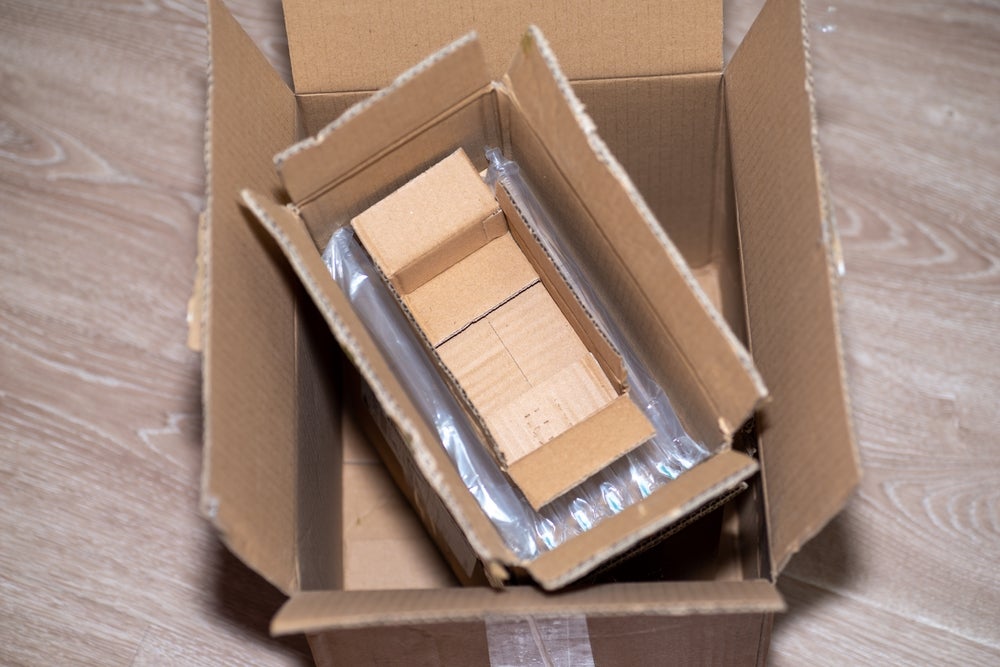
The regulation introduces a clear definition of “empty space” in e-commerce packaging. It includes any unoccupied volume inside a package, including filler materials such as air cushions, bubble wrap, foam and paper padding.
This means common void-fill solutions will be treated as empty space rather than protective material. As a result, oversized boxes filled with air pillows or paper will no longer meet compliance standards.
The PPWR also targets packaging designs that create a misleading impression of volume. Double walls, false bottoms and similar structures are restricted. The aim is to prevent what regulators describe as packaging that “gives a false impression of volume”.
The European Commission is expected to publish harmonised methods for calculating empty space ratios by February 2028, providing a standard approach for compliance across EU markets.
Impact on e-commerce packaging operations
The new packaging waste regulation applies to a wide range of economic operators, including online retailers, fulfilment centres and logistics providers handling transport packaging.
For many businesses, the rules will require a shift towards right-sized packaging. Technologies such as 3D scanning and automated box-making systems are expected to play a growing role in matching packaging size to product dimensions.
The restriction on empty space is likely to reduce reliance on traditional void-fill materials. Companies will need to redesign packaging processes to minimise unused volume rather than compensate for it with fillers.
Industry analysts note that while initial investment may be required, right-sizing can lower shipping costs by reducing dimensional weight. It can also cut material use, supporting both cost efficiency and sustainability targets.
Timeline and exemptions
The PPWR will apply from 12 August 2026, marking the start of a transition period for businesses to adapt their packaging systems. Full enforcement of the 50% empty space limit is scheduled for 2030.
Some exemptions are предусмотрены within the regulation. Packaging may exceed the empty space threshold where additional volume is necessary to protect goods during transport. Certain designs linked to legally protected trademarks or product-specific requirements may also be excluded if registered before the rules take effect.
The regulation builds on the existing EU Packaging and Packaging Waste Directive, tightening controls on over-packaging in response to the growth of e-commerce and rising packaging waste volumes.
For the global packaging industry, the PPWR introduces a clear signal: reducing empty space in e-commerce packaging is moving from voluntary best practice to regulatory requirement.