

Circular Economy Working for the Swiss Machinery Manufacturer Industry
Faced with the increasing scarcity of resources and environmental pressures, the Swiss machinery manufacturer industry is exploring new leverage points for innovation. With the support of Innosuisse, the international Eureka BePro-CEND project is focusing on data collection and analysis, along with the circular economy, to help companies reduce their CO₂ emissions, extend the service life of their products and create sustainable economic models.
The Swiss machinery manufacturing industry is facing major challenges, such as resource shortages, growing environmental pressures and tough economic competition. The international Eureka BePro-CEND project, supported by Innosuisse, aims to promote the circular economy in this sector through data-driven approaches.
To this end, a number of Swiss and German industrial and academic partners are working together to develop an innovative methodology that aims to help companies develop digital and circular economic models, and then to produce sound profitability analyses to guarantee their viability.
From an environmental perspective, partner companies plan to significantly reduce the CO₂ emissions associated with producing and using machinery. In economic terms, the Swiss partners have set themselves the goal of generating substantial profits by launching new, innovative circular services.
Using the circular model to leverage innovation
Today, there continues to be a lack of tools and practical methods for developing and rolling out circular economic models in the manufacturing sector. According to Dr Jochen Wulf, senior lecturer in Smart Services at Zurich University of Applied Sciences (ZHAW), the BePro-CEND project is set to bridge this gap.
“Our research in the fields of data analysis and artificial intelligence aims to give partner companies a way of reducing their internal production scrap, extending the service life of their products and enhancing resource efficiency, all whilst generating new streams of income and bringing down costs”.
Various workshops, interviews and prototype tests are currently being organised to collect information and validate solutions. “The ZHAW is overseeing the analytical modelling and optimisation with the aim of creating service concepts based on data and adapted to each partner’s specific operating scenario”, adds Dr Jürg Meierhofer, senior lecturer and researcher at ZHAW.
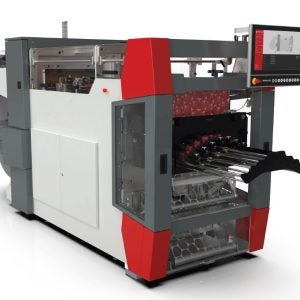
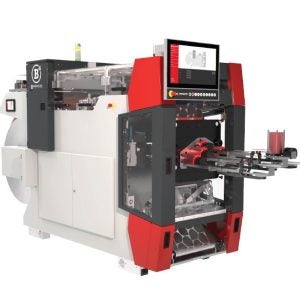
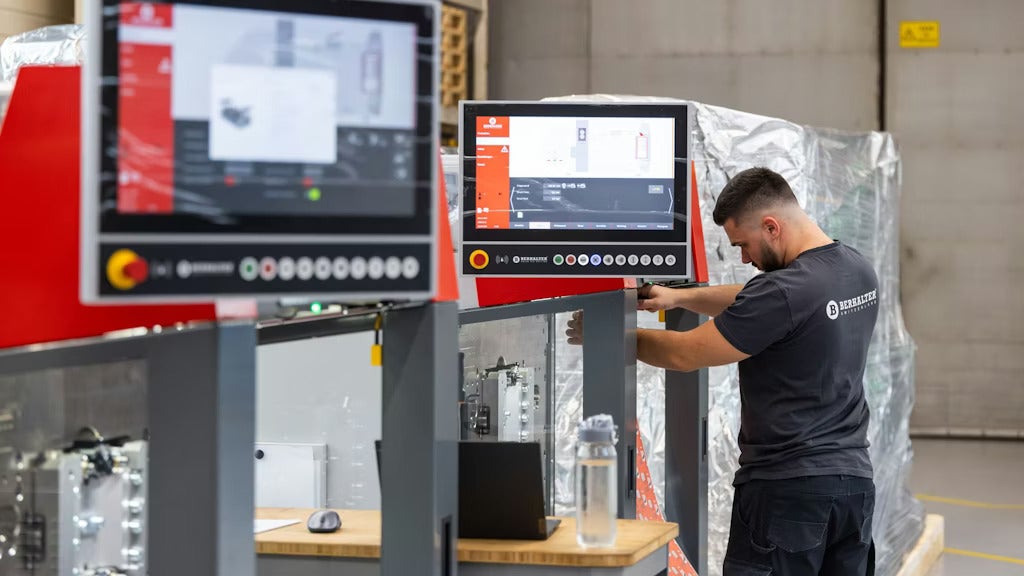
For Swiss entrepreneurs, this latest technology could open doors to unique opportunities. “As an SME working in the export sector, we’re hoping to reinforce our international competitive edge through the introduction of a unique technology in the packaging industry. By combining adaptive tool technology with digital intelligence, we’re not only improving our efficiency, but we’re also marking the start of a new era focused on auto-optimised and sustainable production systems, which will surely help us to win over new markets”, explains Dalibor Schuman, managing director of BERHALTER Swiss Die-Cutting.
For Bühler Group, integrating BePro-CEND will help them take another step towards the company’s digital transformation. “In the power and mobility sectors, producers generate vast volumes of machine data, but they’re not yet able to exploit this data in order to make consistent decisions on improving availability, quality and sustainability.
“This new approach should allow us to optimise the performance of our equipment and offer our clients solutions that are more reliable and more sustainable. In turn, this will strengthen our position as a technological market leader”, concludes Patrik Meier, global director of product development at Bühler Group.
Added-value generated through international collaboration
This project is part of an international Eureka project and is therefore being developed with a number of Swiss and German partners. “The German partners are playing a key role in developing the basic tools and concepts for the project. They provide use cases and data that are incredibly useful for testing, refining and generalising the tools in different industrial contexts”, explains Jochen Wulf, who believes that “this cross-border collaboration is only adding to the potential impact”.
Thanks to the Eureka network, tools and methods can be developed collectively and made available to companies in both countries and beyond. “For us, Eureka is the perfect platform to open up access to Europe’s leading research and development network, accelerating upgrades for revolutionary solutions that would have been difficult to make a reality alone”, elaborates Dalibor Schuman.