

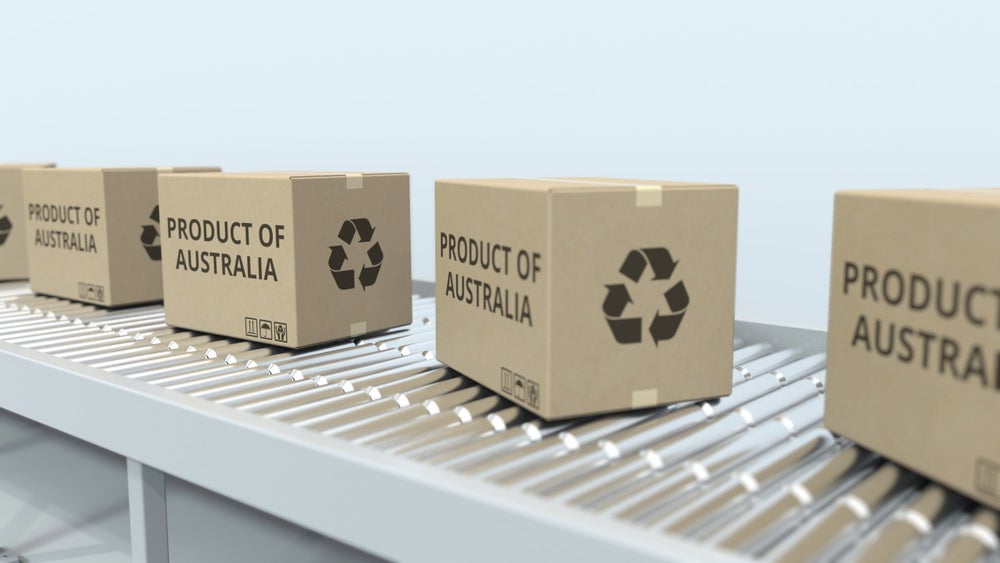
Australia is at a pivotal moment in its journey towards sustainable packaging. With the National Packaging Targets (NPTs) guiding the nation, businesses and policymakers are working to transition from a linear model of consumption to a circular economy, ensuring that packaging is designed, used, and recovered responsibly.
As the 2026 horizon approaches, the roadmap highlights key milestones, challenges, and opportunities for the packaging industry.
The state of packaging sustainability in Australia
Since the NPTs were established in 2018, Australia has made measurable progress in sustainable packaging. The targets aim for 100% of packaging to be reusable, recyclable, or compostable, 70% of plastic packaging to be recycled or composted, and an average of 50% recycled content in packaging.
While there has been notable progress—such as achieving 86% of packaging being reusable, recyclable, or compostable—plastic recycling still lags behind at 19%.
Businesses are increasingly recognising the importance of sustainable packaging, not only for regulatory compliance but also for meeting consumer expectations and enhancing brand reputation.
A focus on problematic and unnecessary single-use plastics has seen a 40% reduction, showing that collective industry efforts can drive tangible environmental outcomes.
The challenge now lies in scaling solutions across diverse sectors, from food and beverage to e-commerce and industrial packaging.
Strategic approaches for 2026 and beyond
Australia’s packaging roadmap for 2026 emphasises collaboration between industry, government, and consumers. The Australian Packaging Covenant Organisation (APCO) provides tools and frameworks for businesses to integrate sustainability into design and operations.
Strategies include increasing the use of recycled content, improving collection and recycling infrastructure, and designing packaging for longevity and reuse.
Eco-modulation, a new approach to membership fees, incentivises businesses to adopt packaging practices that reduce environmental impact.
Companies with high-impact packaging are encouraged to redesign or shift to more sustainable alternatives, while low-impact designs may benefit from reduced fees.
This mechanism aligns economic incentives with environmental outcomes, fostering innovation across the supply chain.
Business opportunities and long-term impact
The shift towards circular packaging presents significant opportunities for Australian businesses. Incorporating recycled materials and sustainable designs can reduce costs, enhance supply chain resilience, and open access to environmentally conscious markets.
Retailers and manufacturers can leverage the roadmap to showcase sustainability credentials, strengthen stakeholder relationships, and future-proof operations against tightening regulations.
Beyond commercial benefits, the long-term impact of a circular packaging system contributes to environmental protection, reduced landfill waste, and resource conservation.
Businesses that engage proactively with APCO and commit to the 2026 roadmap will be well-positioned to lead in sustainability while meeting consumer and regulatory expectations.