
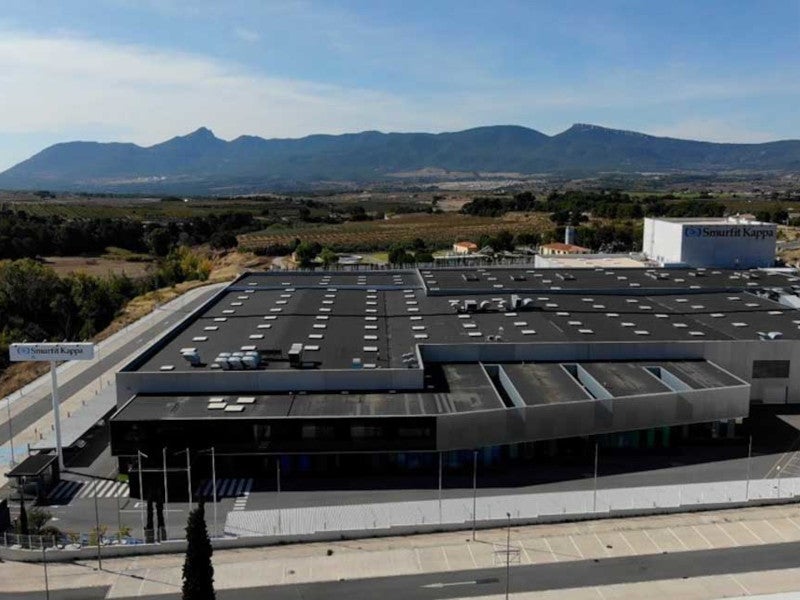
Smurfit Kappa, a global packaging manufacturer based in Ireland, opened its new Bag-in-Box® (BIB) packaging plant in the town of Ibi, Alicantina, Spain, in November 2014.
Recommended Buyers Guides

The facility is located approximately 1km from Smurfit Kappa’s existing BIB factory, Plastics Vincent, in Alicante. The plant was built with an investment of €28m (approximately $35m).
In February 2024, Smurfit Kappa announced a €54m investment to expand the capacity of the Ibi BIB® facility, doubling its production. The expansion is expected to create an additional 200 jobs in the local area.
The investment aims to support the plant’s operational sustainability and enhance its product offerings through advanced waste management systems, plus achieve considerable energy savings.
Smurfit Kappa BIB plant details
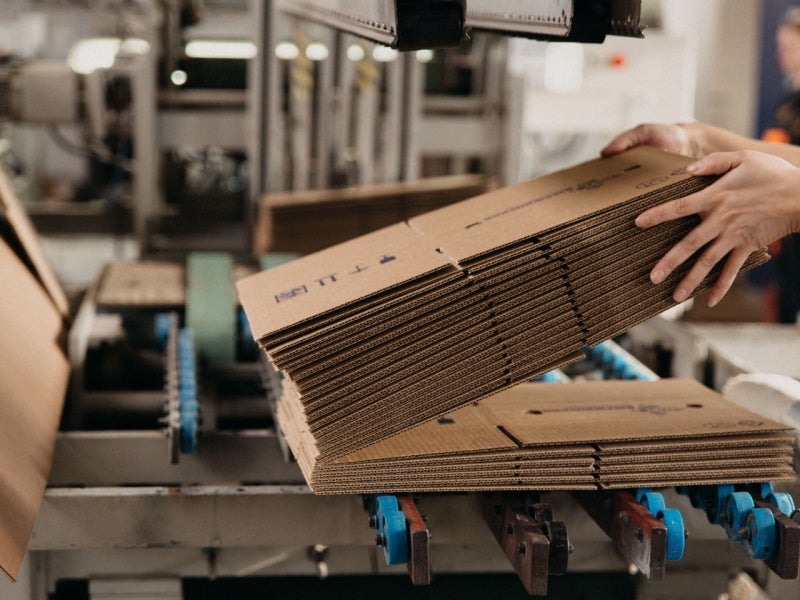
The Smurfit Kappa BIB facility is equipped with modern, efficient and automated machinery including robotic production lines for systematic assembly of multi-layer polyethylene (PE) bags, spouts and taps.
Air-filtration, air-conditioning and anti-contamination procedures are combined with continuous temperature and humidity monitoring to maintain high standards of quality, hygiene and safety at the plant.
The products are fully compliant with quality and hygiene standards as per food packaging regulations.
Smurfit Kappa BIB packaging product portfolio
BIB is a sustainable packaging solution offered by Smurfit Kappa for packing liquids and semi-liquids. It is made from corrugated cardboard or solid board, with four films, a bag and a tap, from which pouring the liquid is easy and safe.
The packaging products are suitable for packaging cooking oils, dairy, juice, liquid eggs, water, wine and other food products, non-food liquids and semi-liquids such as cleaning products, cosmetics, detergents, liquid fertilisers, motor oil and paint.
BIB packaging options include BIB bags, BIB boxes, BIB bulk liquid containers, BIB closures, BIB complete systems, BIB packaging connectors, BIB packaging pouch-ups, BIB packaging UN-homologated solutions, BIB packaging Vitop® handles, BIB packaging Vitop taps and BIB tubes.
The BIB products are available in standard sizes – capacities range from two litres to 1,000 litres – with tamper-proof taps and multi-layer PE bags.
Each bag is designed to retain product properties by preserving the liquid inside from contamination due to minimised air intake during the filling and pouring process. The barrier films in the packaging isolate the contents of the pack from light and air outside.
Other benefits of BIB packaging include an enhanced shelf-life of food products before and after the pack is opened, thus reducing waste. The product is also very consumer-friendly and is easy to carry, use and store. It also serves as a convenient packaging solution for industrial packaging.
Sustainability of the PE bag and tap packaging
BIB packaging offers logistical advantages as it weighs less compared to other packaging products such as glass or plastic. The lightweight packaging solution provides exceptional protection during transit.
The unfilled packs can be supplied flat to customers, thereby maximising storage space, minimising transportation costs and reducing carbon dioxide emissions during transport.
The BIB packaging is made of 75% corrugated cardboard and 25% plastic, which can easily be separated. The packaging waste that is sent to landfills is reduced as the cardboard has a recycling rate of 77% for the European paper packaging industry, and the bag can also be used for waste-to-energy incineration.
The product is considered highly environmentally friendly as it offers a lower carbon footprint than other packaging alternatives.
Marketing commentary on Smurfit Kappa
Smurfit Kappa is headquartered in Dublin, Ireland, with regional headquarters in Paris and Miami. The company designs and manufactures paper-based packaging products with operations in 40 countries. It also offers recycling solutions and owns 104,000 hectares of forest land in Latin America.
It is the second-largest producer and leading provider of BIB packaging products worldwide with 18 factories located in Argentina, Bulgaria, Canada, France, Germany, Italy, Mexico, Poland, Romania, Spain, Sweden, the UK and the US.
Related content
Smurfit Kappa opens new Bag-in-Box plant in Spain
Irish paper-based packaging producer Smurfit Kappa has reportedly opened its new Bag-in-Box plant in Ibi, Spain.
Smurfit’s €28m Bag-in-Box plant details
The new facility is located approximately one kilometre from Smurfit Kappa’s existing Bag-in-Box factory, Plastics Vincent, in Alicante.
The Ibi facility offers new and best performance features in the production of Bag-in-Box packaging, according to Smurfit Kappa.
The plant is equipped with modern, efficient and automated machinery for systematic assembley of bags, spouts and taps.
Air-filtration, air-conditioning and anti-contamination procedures are combined with continuous temperature and humidity monitoring to maintain high standards of quality, hygiene and safety at the plant.
The products are fully compliant with quality and hygiene standards as per food packaging regulations.
Benefits of the plastic tap and multi-layer polyethylene bag packaging
Bag-in-Box packaging is made from corrugated cardboard, or solid board, having four films, a bag and a tap, from which pouring the liquid is easy and safe. The Bag-in-Box products are available in standard sizes – capacities range from 2l to 1,000l litres – with tamper-proof taps and multi-layer PE bags.
Each bag is designed to retain product properties by preserving the liquid inside from contamination due to minimised air intake during the filling and pouring process. The barrier films in the packaging isolate the contents of the pack from light and air outside. The tamper-proof Vitop compact tap is designed to prevent permeation of gases such as oxygen.
Other benefits of Bag-in-Box packaging include an enhanced shelf-life of food products before and after the pack is opened, thus reducing waste. The product is also very consumer-friendly and is easy to carry, use and store. It also serves as a convenient packaging solution for industrial packaging.
Sustainability of the PE bag and tap packaging
Bag-in-Box packaging offers logistical advantages as it weighs less compared with other packaging products, such as glass or plastics. The lightweight packaging solution provides exceptional protection during transit.
The unfilled packs can be supplied flat to customers, thereby maximising storage space and minimising transportation costs. It also results in a reduction of carbon dioxide emissions during transport.
The Bag-in-Box packaging is made of 75% corrugated cardboard and 25% plastic, which can easily be separated. The packaging waste that is sent to landfills will be reduced as the cardboard has a recycling rate of 77% for the European paper packaging industry and the bag can also be used for waste-to-energy incineration.
The product is considered highly environmentally friendly as it offers lower carbon footprint than other packaging alternatives.
The second largest Bag-in-Box packaging producer
Smurfit Kappa is headquartered in Dublin, Ireland, with regional headquarters in Paris and Miami. The company designs and manufactures paper-based packaging products with operations in 32 countries. It also offers recycling solutions and owns 104,000ha of forest land in Latin America.
It is the second largest producer of Bag-in-Box packaging products worldwide with six factories located in France, Italy, Spain, Russia, Argentina and Canada.
